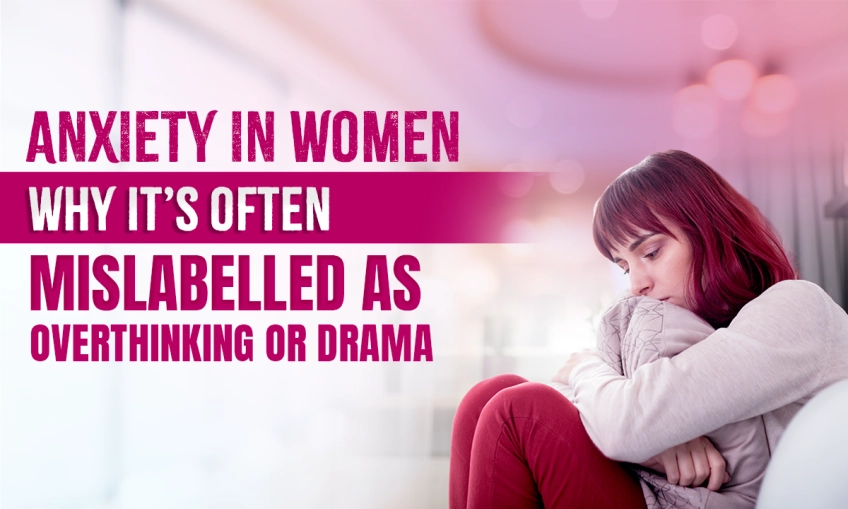
The mental health of women is a burning but overlooked issue, in particular, when anxiety is brushed off as the simple result of overthinking or drama. These labels hush actual struggles in a society that weighs women who are supposed to balance work and family as well as unending duties. This post deconstructs symptoms of anxiety in women, discusses the difference between overthinking vs anxiety, and explains the importance of the correct recognition, relying on clinical experience to support the empowerment of Better Help.
Silent Tax on Women's Mental Health
According to world research on the World Health Organization, women are twice as likely to experience anxiety. This is increased by hormonal changes in menstrual cycles, pregnancy, and menopause, but society sweeps it away. In India, where the female population is mostly characterized by submissiveness to family and neglecting their personal care, women's mental health stigma transforms anxiety into a silent epidemic. The wrong identification as emotional excess postpones treatment, exacerbating conditions such as insomnia or panic attacks.
Overthinking vs Anxiety: Key Differences
People confuse the two, but overthinking vs anxiety reveals a clear divide.
- Excessive worry over simple matters, such as repeating a conversation, is referred to as overthinking. It fades with distraction.
- Anxiety is a clinical condition where the physical symptoms of anxiety in women include increased heart rate, sweating, or tightness in the chest. It is enduring, sleep-disturbing, and causes fight-or-flight reactions.
| Aspect | Overthinking | Anxiety |
| Duration | Temporary, situation-specific | Persistent, even spontaneous. |
| Physical Signs | Rare | Heart palpitations, fatigue, GI issues |
| Impact | Mental fatigue | Disturbs normal life/work. |
| Response to Logic | Eases with reasoning | Maintains itself in spite of assurance. |
Real-life scenario: The working mother is worried about a deadline (overthinking). When it goes as far as trembling hands and dread, it is the anxiety - something that requires professional help. Overthinking vs anxiety
Common Symptoms of Anxiety in Women
The common symptoms of anxiety in women are usually similar to those of stress, but are an indication of more serious problems:
- Emotional: Oversensitivity, restlessness, anxiousness.
- Physical: Muscle spasms, headaches, nausea- associated with estrogen changes.
- Behavioral: Social withdrawal, obsessiveness, or impatience.
In motherhood, these combine into Motherhood Burnout, where one is always on alert, and the nervous system thus becomes tired. The cultural expectations add pressure to Indian women, increasing the level of anxiety and stress in women.
Causes of Anxiety in Women
There is no single cause, but several factors increase vulnerability:
- Hormonal changes (menstrual cycle, pregnancy, postpartum, menopause)
- Chronic stress and emotional labor
- Trauma or unresolved childhood experiences
- Societal pressure to “manage everything” flawlessly
- Lack of emotional validation
Understanding the causes of anxiety in women helps shift the narrative from blame to compassion.
Reasons the Mislabelling Occurs—and Its Solution
There is also the role of societal prejudices: when women complain and are distressed, they are considered to be dramatic, and when men are stressed, they are regarded to be stressed. This nullifies causes of anxiety in women, such as work-life imbalance or trauma. Solution? Confirm experiences and provide evidence-based anxiety treatment to women:
- Intervention such as CBT (Cognitive Behavioral Therapy).
- Personal changes: Heart rate tracker or meditation apps.
- Psychiatric consultation and medication where necessary.
The problem is solved by early identification. In healthcare, mental health screening is an important tool that should be incorporated into patient monitoring systems to fill gaps.
It is no drama to prioritize the mental health of women, but it is vital. Testimonies are destigmatizing, so share your story below.