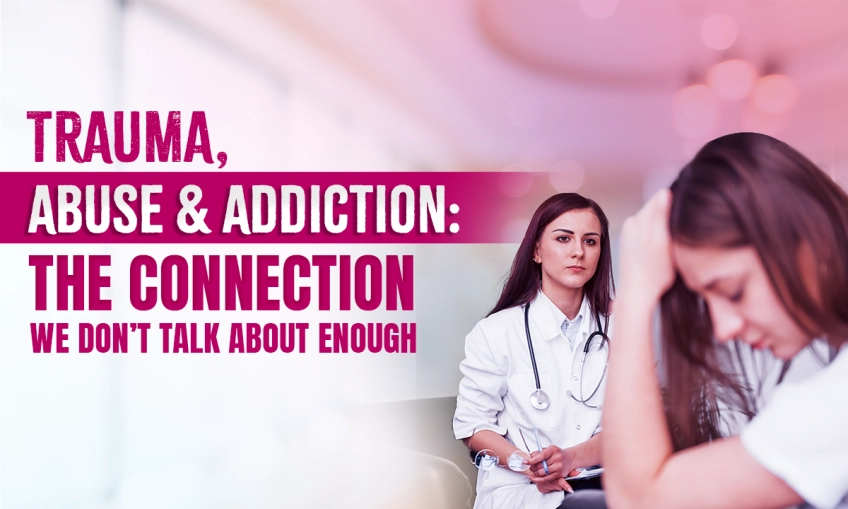
Addiction has remained a misconception to many individuals as a lack of willpower or bad decisions. However, underneath the group of substance use disorders, there is sometimes a more hidden story, one of the stories of trauma and abuse. The relationship that exists between trauma and addiction is strong, multifaceted, and much more prevalent than we talk about.
This connection does not involve blame. It is about building caring, enhancing care, and assisting individuals to heal on the ground, not necessarily to cope with some symptoms.
Understanding Trauma and Addiction
The trauma is not merely the event that one has gone through, but how the nervous system and mind of this or that person reacted to the overwhelming events. The causes of trauma may include physical, emotional, or sexual abuse, lack of attention, or abandonment due the domestic violence, or chronic stress.
Trauma is not merely what happened to a victim but rather the way their nervous system and mind reacted to the experiences that were too much. Trauma and substance abuse can result from:
- Battering, emotional, or sexual abuse.
- Neglect or abandonment
- Domestic violence
- Childhood instability or long-term stress.
- Accidents, medical trauma or natural disasters.
In case the trauma is not resolved, the emotional pain does not go away. Rather, most individuals resort to substances as a coping mechanism, getting numb, or evading. That is where the trauma and substance abuse tend to overlap.
How Trauma Leads to Addiction
Self-medication is one of the most widespread routes to addiction. Drugs temporarily suppress unpleasant feelings of fear, shame, guilt, anger, or sadness. The brain eventually comes to associate relief with the ingestion of substances.
Trauma can affect:
- Emotional regulation
- Stress response systems
- Impulse control
- Feeling of security and self-esteem.
In cases where substances provide a short-term relief, the repeated use may easily lead to dependency. It is here that the trauma causes addiction, particularly where the said trauma has gone undiagnosed or untreated.
PTSD and Addiction: A Strong and Risky Link
Individuals who experience post-traumatic stress disorder (PTSD) are at a very high probability of having substance use disorders. PTSD and Addiction are associated with each other and form an agonizing loop.
The common symptoms of PTSD are:
- Flashbacks and flashbacks memories.
- Hypervigilance and anxiety
- Emotional numbness
- Sleep disturbances
Drugs might seem like a means of silencing these symptoms, but they end up exacerbating them. Such a co-occurrence of PTSD with substance abuse may complicate the recovery without treating the two disorders simultaneously.
Effects of Childhood Traumatic Stress and Addiction
The research on early life experiences provides some of the best evidence of the linkage between trauma and addiction. There is a strong interlink between childhood trauma and addiction.
Examples of childhood trauma and addiction can include:
- Physical, emotional, and sexual abuse.
- Neglect
- Parents are addicted or mentally ill.
- Constant criticism, anxiety, or insecurity.
Effects of childhood trauma may have permanent consequences even in adulthood, which affect coping strategies, attachment styles, and emotional strength. Drugs are usually a means of dealing with childhood pain, which was never given room to heal.
Effects of Trauma on Addiction Recovery
Trauma does not just add to addiction, but recovery is also influenced. In the absence of trauma-informed care, people are likely to experience:
- Higher relapse risk
- Inability to trust therapists or support systems.
- Shut down or emotional overload in treatment.
- Stigma causes avoidance of help-seeking.
The factors on the effects of trauma on addiction must be dealt with to ensure long-term recovery. The healing should be able to cover the substance use and the underlying trauma.
Why Trauma-Informed Treatment Matters
Proper recovery interventions acknowledge the fact that both substance abuse and trauma are likely to go hand in hand. Trauma-informed care is concerned with:
- Emotional safety
- Empowerment and choice
- Developing effective coping mechanisms.
- Not only behaviors, but also dealing with root causes.
When people feel seen rather than judged with substance abuse and trauma, real healing becomes possible.
Breaking the Silence
The relationship between trauma, abuse, and addiction should be talked about more openly, and we are here to help at Athena OKAS. Addiction is not usually an outcome of failure, but rather a survival mechanism. Once we recognize this fact, we will be closer to compassion, improved care, and significant recovery.
The process of healing does not start with the question, "What is wrong with you?"
It starts with inquiring, What happened to you- and how can we make you better?.
At Athena OKAS- India's first exclusive women's mental health and addiction treatment center, we provide personalized, trauma-informed care in a 100% safe, women-only environment.
Reach out today and take the first step toward strength, renewal, and lasting recovery.