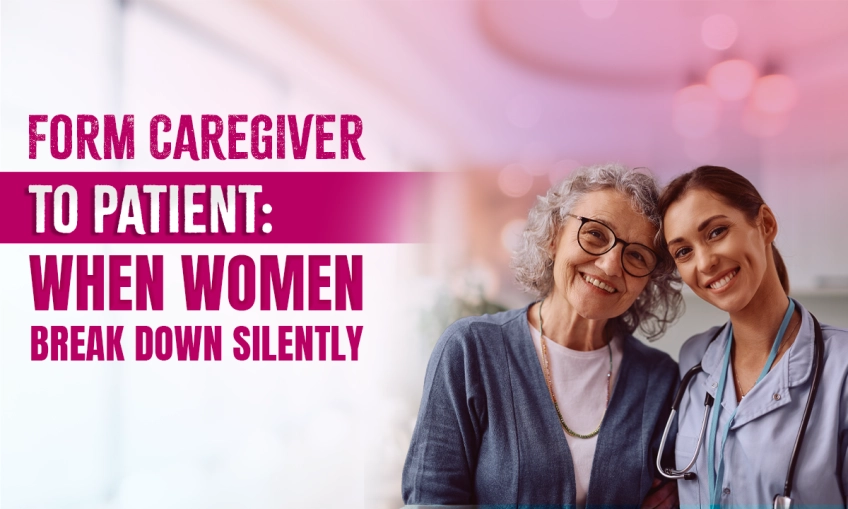
Caregiving involves both physical and emotional investment that can have a long-term impact on the individual’s health. Supporting someone’s health recovery from chronic illness, such as cancer, can lead to caregiver burnout. Caregiver burnout can be explained as the physical, emotional, social or financial obstacles experienced by the individuals offering care for the patient. Oftentimes, women become the caregivers as they might be perceived as more affectionate and understanding, thereby contributing towards women’s mental health being compromised.
Understanding Caregiver Burnout in Women
Any individual who provides care without payment to an individual with disability can be called a caregiver. For example, spouse, children, siblings and friends offering support to a loved one during a health crisis. Women oftentimes take the role of caregivers, being perceived as natural nurturers. These can include both working women and homemakers taking up additional roles of supervising medications, offering emotional space and accompanying the patient in daily routine.
Caregiver burnout in women can be observed if the person does not get to rest and is constantly engaged in caregiving responsibilities, such that their own health is at stake.
The Impact of Caregiving on Women’s Mental Health
Some of the many ways in which women’s mental health can be impacted due to continuous caregiving include:
1. Increased risk of anxiety and depression
2. Higher anxiety and being hypervigilant
3. Disturbed daily routine leading to exhaustion
4. Sleep challenges can make one feel lethargic
5. Decreased socialisation can lead to isolation
Common Signs of Caregiver Burnout in Women
- Feeling fatigued
- Mood swings
- Difficulty concentrating
- Withdrawing from activities
- Increased anxiety
- Signs of depression
- Frequent body pain
- Reduced socialisation
The signs of caregiver burnout in women may vary from person to person, depending on the responsibilities and their own body’s response. These signs should be taken seriously, and the mental health of caregivers should be professionally supported.
The Silent Breakdown: Why Women Don’t Speak Up
Despite a continuous feeling of exhaustion, women may not be able to verbalise their concerns and reach out for help. This can lead to a silent breakdown in women that can impact their present and future lives. Silent breakdown can happen due to many reasons, such as:
1. Fear of being judged
2. Stigma associated with seeking help
3. Lack of social support
4. Financial dependence
5. Lack of awareness
Read Also: Why Women Overthink and How to break the cycle
The Relationship Between Mental Health and Caregiving
There’s a very famous saying, ‘You can’t pour from an empty cup.’ This emphasizes how the caregiver’s mental health is important. For instance, if the caregiver feels emotionally exhausted and irritable, then the support offered can also be compromised. Similarly, if the caregiver feels emotionally safe and energetic, then the assistance offered can also differ. Thus, mental health for caregivers should be taken care of properly for better overall well-being.
How to Prevent Caregiver Burnout in Women
Efforts can be made to prevent caregiver burnout in women. These efforts can look like:
1. Setting healthy boundaries
2. Sharing responsibilities
3. Seeking professional support
4. Mindfulness techniques
5. Taking short breaks
6. Honest communication
7. Joining support groups
These efforts can be powerful ways of preventing silent breakdown in women.
Support Systems for Women Caregivers
Women’s mental health can improve with shared responsibilities and healthy support systems. The support system for women can be in many different ways, such as:
1. Financial assistance
2. Emotional space
3. Support with resources
4. Informational support
The different components of the support system for women caregivers can be:
1. Family support
2. Friends support
3. Caregivers' support group
4. Professional counselling
5. Government assistance programs
6. Workplace flexibility
7. Community support
These can be some of the many forms of social support that can contribute towards better quality of life for the caregivers.
Final Thoughts
Caregiving can be taxing if one is unable to find space for oneself and loses one’s own being in the process. The chances of anxiety and other mental health concerns can also increase without proper breaks and support for the caregivers. At Athena OKAS, we hold pace for you and want you to feel heard with the help of our expert professionals. The women-centric center enables you to honestly share without any hesitation or fear.
If you are looking for such a space wherein you can pause from your caregiving responsibilities and learn to find yourself again, then reach out to Athena OKAS. You can call us at +91 9289730444, and we would be happy to support you!